Tuesday, January 20, 2015

A short narrative breakdown of Touching the Void

image source

Day 1: 

In 1985, two climbers eager and experiences climbers, Joe Simpson and Simon Yates arrive at the base of the perilous west face of the Siula Grande in the Peruvian Mountains. Both climbers begin their assent and make major progress after the first day. Night falls and they build a snow cave to protect themselves from the blizzard and the cold. 

Day 2: 

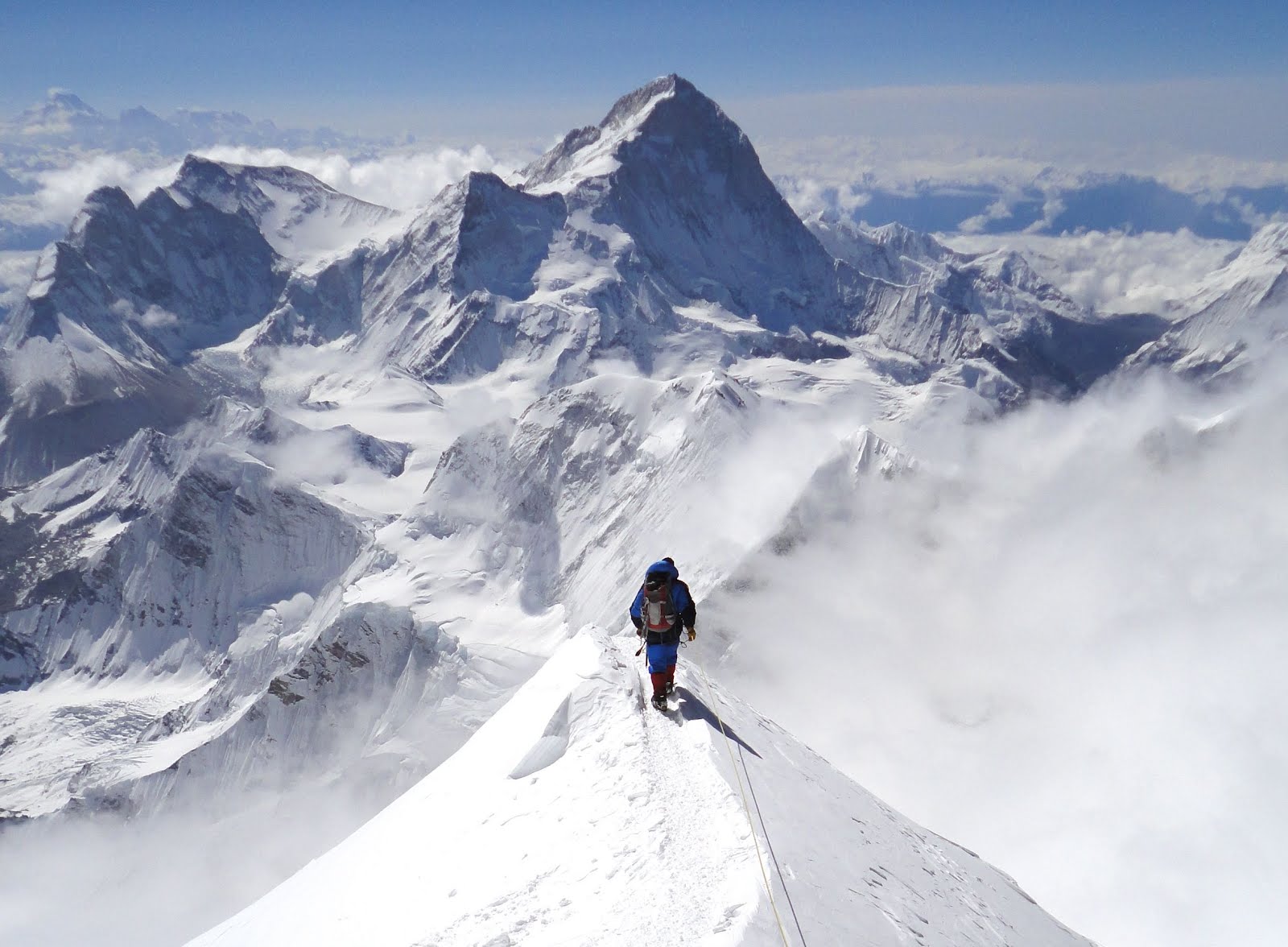
Morning begins with a warm breakfast - ice melts in a gas heated pot to warm water for some brew. Joe and Simon set out towards the summit. Weather conditions worsened a bit while they climbed a vertical ice wall. At 20,000 feet, the wind shield increased, a blizzard followed, and the temperature plummeted. Joe and Simon struggled to climb a rocky and icy ridge. The last section of face presented itself quite challenging to the experienced climbers. Powdered snow covered the ice and potential slips down the face of the mountain became imminent. Darkness turned into night and both climbers shielded themselves form the cold and the snow inside a snow cave. 

Day 3: 

The next morning both climbers finally could see the dangerous path they attempted to climb last night. Towards the top the cornices and the headwall were covered with powdered snow and climbing became quite precarious and dangerous. 
A fear of climbing into a trap tormented the climbers' minds. The soon climb the west face and push up the ridge towards the top. Early afternoon, Joe and Simon reach the summit - a spectacular mountainous scenery followed. 
Clouds began coming in from the east as both climbers decided to descend the mountain down the north ridge. A whiteout soon followed and both climbers were lost. They approached an overhanging cornice and Simon slightly slipped but he did not injure himself. Luckily he found the ridge. That night the gas ran out. 

Day 4: 

Joe and Simon descended the worst part of the of the northern ridge the other day, and they hoped that they might conclude their trip that day. Later, Joe was in front of Simon as he approached this vertical overhang. He decided to stick his ice axes into the wall and make the vertical descent. At one moment, the sound of the ax striking the ice made a peculiar sound. Joe wanted to make a solid ax placement but the ice cracked and he fell several feet down onto snow and ice. He his lower leg went through his knee joint and his leg broke. Simon came to help Joe, and he decided to tie to 150 foot ropes in order to lower Joe down the mountain at 300 foot intervals. Simon lowered Joe very quickly. Suddenly, Joe went over a ledge and the rope tightened. Simon could not re-feed the rope through the belay device as Joe hung 80 feet above a 150 deep crevice in an ice glacier below. Simon could not hold Joe for long, so he assumed that Joe perhaps hung a couple feet from the bottom of an overhang. Simon cut the rope, and Joe fell almost 150 feet into the crevice. That night the alpine tragedy began. 

Day 5: 

Hunger and thirst take a toll on both climbers. Luckily Joe survives the fall down the crevice. At first light, Joe began to scream Simon's name in hopes that Simon might hear him. Simon eventually reached the crevice and shouted Joe's name, but he remained convinced that Joe must have died due to the fall. So, Simon continued his descent. Joe soon lost hope that Simon would hear him, so he decided to descend deeper into the crevice, thinking that there might be an alternative exit. Joe eventually saw a hole at the top of a slope, and he climbed it to the top. Meantime, Simon reached base camp and began to rest. At the top, Joe sees Simon's foot steps in the snow and follows them down the mountain. He crawled across a glacier filled with crevices covered by powdered snow. Joe crossed the glacier partway before night fell, and he had to build a snow cave. 

Day 6: 

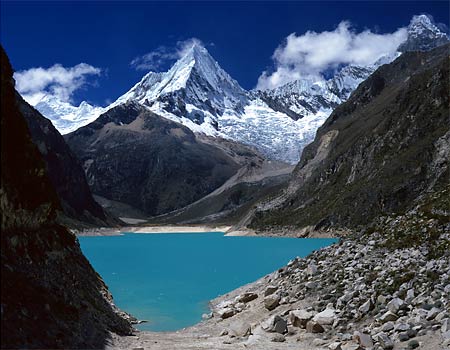
The next morning Joe winds his way through a labyrinth of crevice pits in a descending glacier. He eventually reaches dry boulders at the bottom of the glacier that leads towards a lake. He stabilizes his leg and undertakes the painful ordeal of crossing the boulder-filled valley back to the site of the base camp. A quite night drapes the sky with darkness and Joe made it only part way across the boulder field. 

Day 7:  

The next morning Joe continued to drag himself across the boulder field back to base camp. Soon Joe was very close to the base camp; it took him an entire day to reach the site. He began to yell Simon's name into the night. Simon heard the call of his name and was quite stirred. He looked around the camp and followed the voice of his name being called by Joe. Simon spotted Joe and brought him back to base camp. The following day the left to seek medical attention. 

Six Reflective Questions to Touching the Void

image source
What did you learn from the movie? 

I learned that alpine expeditions are certainly dangerous and an incredible life-risk if the climber does no have a significant amount of climbing experience. I also learned the importance of trust while climbing. For example, in the movie, Simon and Joe are tethered by a rope and each must trust the other in case one falls and injures himself. Most of all, Joe Simpson taught me the power of perseverance and the burning desire for survival. Man must sometimes break the boundaries of hunger, thirst, comfort, and pain to live. 

What surprised you? 

I think I always fumbled with a naive idea that anyone close to you will support you and aid you through adversity. I was wrong. Many times, as in Simon's case, fatigue, thirst, hunger, and a lack of awareness and reason produce dangerous situations where a climber makes a risky decision to endanger both his partner and himself. I did not expect that Simon would cut the rope, but I do understand that he made and assumption and chose the best kind of alternative at the moment to ensure the possible survival of his friend and him . I continue to disagree with Simon's decision about cutting the rope. I think that decision was an extreme measure that endangered the life of his friend. 

What questions remain after viewing the movie? 

Was Joe angry at Simon at any moment ?

Can Joe still walk, run, and climb after the incident? 

Has anyone ever attempted to climb the same face of the mountain as Joe and Simon?

What would you like to know more about? 

I would like to know more about alpine mountaineering and the general geology behind these incredible mountains. I would like to know a bit more mountaineering vocabulary that should aid me in my summary. I would also like to study a bit more about crevices and their imminent danger  linked yo glaciers. I would also like to learn more about human mental strength and ways to build it. 

Problematic concepts in the film? 

1. The benefits and dangers of classical alpine mountaineering? 

2. What are some psychological effects on climbers and how do they influence whether the climb is successful or not? 

3. Why did Simon make the decision to cut his partner's rope - might this be an instance of human natures drive for the survival of the fittest? 

4. What kind of role does fear play in climbing and are there positive and negative consequences to it? 

5. What are some survival techniques to surviving an injury in the mountains?

6. Why do some alpine climbers settle for risk and choose not to use communications and base camps while attempting high assents - what drives their confidence?  

Was there a specific scene or segment that stayed with you and caused you to be curious?delighted? angry? motivated? 

The moment Simon cut the rope connecting Joe surprised me and left me kind of angry that Simon could not think of a safer alternative. I did understand why he made such a risky assumption and endangered his friend. I also became quite angry at Simon's seemingly oblivious reaction to Joe's fall into the crevice. Simon simply peaked into it and immediately assumed Joe must be dead, then he quickly realized that he must now try to survive. I think a fellow climber should locate a fallen partner and ensure whether they are still alive or dead. However, Joe's courageous descent with a broken leg and his desire to live truly inspired me and motivated me. Joe is an example of perseverance to me. 


Free Write Response to Touching the Void

image source
Touching the Void retells the mountaineering trek of Simon Yates and Joe Simpson that went terribly wrong when one of them breaks a leg while climbing in the Andes. 

I have watched several mountaineering films before, but I must say that the story of Joe Simpson's perseverance and survival is unique. I think that when watching people climb, when you might not have done it before, might leave some perhaps bored and confused. However, I do climb in my life, maybe not alpine climbing, but I do rock climb and boulder. So, I know the enormous physical strain a climber must persevere through in order to reach the top of a wall or summit. Climbing, whatever kind it maybe, is really the extraordinary experience of the journey rather then the destination. Just as all climbing, the craft demands physical perseverance and mental strength. As I watched the film, Simon and Joe beam with ambition and confidence as they undertake an incredible adventure, and ordeal, that will test the limits of their endurance and survival. I also find the fact surprising that only the two of them choose to climb this dangerous face of the Andes Mountains alone. Such an attempt is daring and a bit over-confident. Usually, a group of climbers might ascend with a communications base camp below in case any misfortune occurs. Surprisingly enough, both of them pushed hard towards the summit, successfully climbing the powdered snow peaks that are a looming death slide for any mountaineer. Mountaineering tragedies usually begin somewhere during the descent because climbers are moving with the force of gravity rather them against it, which be the catalyst for disaster if a climber slips. Of course, weather conditions in the mountains are are atrocious for they spontaneity. On the descent, a blizzard hits the climbers and Joe falls from an overhang and breaks his leg, the worst possible tragedy on a mountaineering trek that spells death sentence. Unfortunately, both Joe and Simon have no more gas, so that means they cannot heat ice for water or prepare food. Hunger and thirst intensify the experience of survival. Soon Simon decides to tie both ropes together and lower Joe in 300 foot intervals, while at a 150 foot interval Simon must re-feed the knot joining the two 150 foot ropes back into the belay device. Simon lowers Joe very quickly, and at one point Joe no longer descends along a slope but vertically hangs over a cliff. Now Simon does not know Joe's situation and impatiently waits for Joe to give the rope some slack that Simon may make the transition in ropes. Night falls and the blizzard ensues. Joe makes an attempt to climb the rope to the top of the cliff but his hands are too cold to grip the rope. At that moment Simon "assumes" Joe must be a couple feet off the ground, when in reality Joe hangs 80 feet from a crevice in a glacier that is at-least 150 feet deep. Tragically, Simon "cuts" the rope with his friend who has a broken leg. I was infuriated at that moment of the movie because Simon theoretically killed his friend, and the next day, he assumed he was dead. Joe not only fell the 80 feet but also the 150 feet down into the crevice. I would have done differently because Simon should have done the math. 80 feet is less than 150 feet of rope. If Simon would have slowly descended 80 feet down the slope, Joe would have positioned himself so as not to fall into the crevice. Then, both Joe and Simon  would have descended together. Later on, Simon was criticized by many in England's mountaineering community for cutting his partner's rope. I thought that Simon did not even care so much about whether Joe was still alive. He seemed oblivious to the reality of Joe's fall and simply carried on to ensure his survival - survival of the fittest, unfortunately. In the end, I highly respect Joe's courage and mental strength that enabled him to persevere towards survival although pain, loneliness, hunger, thirst, and cold continued to plague him.