Tuesday, May 5, 2015

Final Reflection

College Writing Reflection 
Did you do all the work? 

I can confidently say that yes I did do all the work assigned for the class. I did not set anything aside for a latter time nor did I ignore certain criteria. 

Well, how did you feel as you progressed through all the projects this year? 

Some students in the class say that they found summarizing slightly difficult to grasp. I also agree. However, summarizing is nothing more than extracting the most basic ideas and communicating these ideas in an organized way that is coherent and interesting. I think that summarizing touches upon a difficult writing concept that differentiates between showing and telling. I know that telling what a certain piece is about is more like explaining. The problem with explaining is that it is not summarizing. Instead, explaining may quickly turn into a fact dumb and one's voice seems bland and drone. Summarizing must contain evidence and facts however it must present this information though a vim and lively medium: a voice. This leads to showing. Summarizing is basically showing a short yet comprehensible clip of an entire piece - much like a trailer does for a movie. Exactly, summarizing is a kind of trailer. Trailers must be intense, suspenseful, vim, and attractive so that views feel compelled to watch the movie. Similarly, summarizing must use strong and vivid adjectives, verbs, and an active voice so that the original piece comes to life in a few lines. The piece must be shown in such a way that the reader is compelled to read on. Of course, this is a skill not easily developed but with practice and the study of descriptive writing it may be accomplished. I felt more confident about my summarizing as I progressed throughout the projects. With each draft, I improved my paper to have a little more voice.  

What about rhetoric? How well did you deal with argumentative writing? 

In the beginning, the concept of rhetorical argumentation seemed rusty for me. I first remember learning it in AP English during my junior year in high school. The concepts of pathos, logos, and ethos were a bit abstract at the time; however, I grasped the ideas and structure with practice. As I progressed from project to project, I applied my creativity to my rhetorical analysis and expanded my understanding of the methods of language writers employ to compel and convince readers. Argumentative writing in itself demands a bit more creative rationalism, which in lieu is supposed to reference the summary as support, hence the importance of mastering summary. The last paper truly exemplified this idea. The project not only demanded summarizing articles and displaying the rhetorical mechanics behind each piece. Creative rationalism was also applied as a link. The rational arguments linked the premise of the paper to the idea discussed in each paragraph.   

Overall, what is the most important aspect of writing that helped you improve this year as a writer? 

Drafting has become tremendously important to me. Drafting allowed me to see my work progress and develop into the final product. I tried to write all my drafts early and revise them as often as possible to refine my premise and reorganize the context of my arguments. I realized that drafting can be powerful method of creative argumentation because I understood what I must improve upon with each draft. Most importantly, I tried to bind all my writing in a certain context to give it meaning. When writing is not organized and does not have a flow associated with it, then it quickly turns into a stream of consciousness, which although creative is more poetic. I tumbled around with my final paper until I defined a specific context in which I could give my idea meaning. Soon enough, proper context set the foundation for further establishing complex though.Usually, most writers struggle with their writing because they don't have a compelling context in which they can establish their ideas. In the end, writing is the ability to communicate complex ideas in a creative and rational way which appeals to people who experience these idea in real life. Good writers appeal to real life. 

Thursday, April 9, 2015

Rational Argument Project Memo Update #2

Background on the Project: 

Previously, my paper focused deeply on the mathematics in nature and how it ranges and influences the perceptions of different societies at various levels of modernization. This time I want to take a step back and just want to leave mathematics at the stand and ask it for a reason why it considers itself important. Here I attempt to explore mathematics not from the bland side that it may seem, but rather I want to seek out how mathematics influences human perception on the world. Why is is that some cultures have a predominantly rectangular geometry and others choose a bit more exotic curved geometry. I want to argue the importance of mathematics for the universal language it is and its ability to express creativity in a variety of ways. I want to delve into some exciting and unorthodox applications of mathematics and deduce how mathematics influences perception. How does fractal geometry and the mathematics of nature influence traditional art, philosophy, and architecture?
  How does rectangularity and its predominance in modern architecture influence modern perception on life, art, philosophy, and the structure on history. Mathematics and its influence on our special perception and our perception on beauty. Finally, I want to rationally argue the vital and prolific presence of mathematics in almost all fields of study, and argue why it serves as a fundamental universal language for all humanity. 

Discussion of Achievements: 

I rhetorically analyzed my first three academic resources. I analyzed the writers of these academic pieces predominantly from their appeal to logos through different modes of rhetoric. I also included two additional academic sources that explore the mathematical definition of beauty and the importance of mathematics as a contributor to all fields of study. One of my sources is authored by Sir Timothy Gowers, the renown British mathematician who explains the influence of mathematics on the world today in his keynote addresses at a conference at the prestigious Clay Mathematics Institute. I hope to deduce some important conclusions from this source. 

Discussion of Problems: 

Although the flow of my essay is coming on quite well, I must refine my sources to only the specific ones that address my issue at hand. I am still working on narrowing down my thesis and main idea of my paper. 

The Work Ahead: 

I must find coherent sources from all the needed fields that support or disprove my premise. I must summarize these sources and analyze their rhetoric.
         

Tuesday, April 7, 2015

Project Memo Update

Background on the project itself:

Look at architecture, art, fashion, and design in general. As I analyze these modes for creativity, I notice that the geometry and the mathematics underlying the art varies with culture and society. In the beginning, when only tribal nations walked the earth there were no cities or pre-existing, man-made designs that could have influenced certain types of architecture or art. Maybe later on in history such a possibility may have existed, but originally the geometry of nature inspired prehistoric artists. For example take a look at African art and the symbols of nature and recursive patterns that emanate from the pottery and textiles. Cave art, vestments, and ancient art all resembled and even mirrored the geometry of nature. In western culture, rectangularity dominates architecture and most design for goo mathematical and hence societal reasons - the need to pack more units into an individual area. Fundamentally, each culture and society has some dominate shape for a specific reason. These shapes may not be exact but there does exist a difference between rectangularity and circularity, linearity and patterns. All this geometry that dominates the world around a society has some effect on its perception. The linearity and rectangularity
or western and modernized cultures mirrors the linear perspectives and outlook on western history and religion. On the other hand, the recursive patterns and fractal geometry typically evident in more traditional cultures influences the circularity and repetitive aspects of eastern or African philosophy and reincarnation religion.

Discussion of the achievements:

I found three great academic sources that outline the basis of my research. I summarized all the sources in my paper and yet have to add the rhetorical analysis. The three sources cover my inquiry on fractal geometry in nature, African art and architecture, and the predominating rectangular characteristic of western architecture. Whether walking to a friends house, visiting the city, or journeying through some remote area of the world, architecture seems to be the most noticeable visual representation of perception and world outlook in a specific region of the world.  

Discussion of problems:

My topic is not that specific and may academics have not taken up the inquiry that I am evolving. I must look to multiple field of study to assess geometry and its effects on human perception. I must look to mathematics, architecture, psychology, anthropology, and history. Sometimes I struggles finding legitimate sources, lest luckily the majority are academic so I don;t have to worry about trivial rhetorical analysis that deals solely with logical fallacies made by writers of popular publishing.

Discussion of the work that lies a head:

I must find coherent sources from all the needed fields that support or disprove my premise. I must summarize these sources and analyze their rhetoric.

Recursion Examples

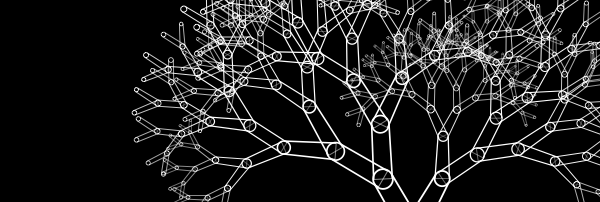
Here are some pictures that simplify the idea of recursion, which I am exploring in my search for a broader mathematical outlook on the world and nature.


Monday, April 6, 2015

Why are most buildings rectangular?

Image 
In his piece on the predominant rectangularity in architecture, “Why are most buildings rectangular,” Dr. Philip Steadman, a professor of architecture at University College London, logically explains that the “superior flexibility of dimensioning” allowed by rectangular design leads to its predominance. Steadman argues that western culture is dominated by the fundamental quadrilateral shape: the rectangle. The four sided shape dominates western architecture as well as most architecture in modernized societies all over the world because it allows for more area to be used for multi-room plans and housing.This source will allow me to establish my position maintaining the predominance of the quadrilateral in western and modern perspective

Fractal Geometry in African Culture


Dr. Ron Eglash, a mathematics professor at a Polytechnic institute in New York shares his exploration from the African continent. While exploring numerous African communities, Eglash presents the fractal and recursive structure of African villages. This source will allow me to explore the applications of fractal geometry in nature and its implications on various societies, especially African society which seems to be inspired by the fractal geometry of nature by which they model the structure of their everyday lives.  

Thursday, March 26, 2015

visual rhetoric and the study of circular and linear perception


About a year ago, I visited Europe. I went on a
wonderful cross country journey from Poland to Germany to Austria and finally to Rome and back to Poland. The trip was spectacular. Of all the wonderful scenic sites and architecture that I saw, I noticed that the architecture and the mindset of most European people does not stray far away from the farther western cousins in North America. If we look at the so called "civilized societies" in the west and some specific societies of the south and the east, some interesting differences in fundamental perspective begin to emerge. The first picture to the top left is a picture of my kitchen. Looking at this picture, ignore all the prevalent decorations and exotic motifs that give my kitchen a semblance of a tropical theme. Fundamentally, the building blocks of my kitchen, the main interior design - cabinets, chairs, fridge, other appliances, and in fact my entire house - has one predominant shape: the quadrilateral that is composed of lines. The second picture is a picture of a rug on my living room floor. My floor is linear, while the rug adds a bit of "exotic" panache to the room with its concentric circles, arcs, and curves. This is just a micro-theme of a greater cultural comparison between the modern west and some parts of traditional east. Look at western society, 90 of our architecture, which is an underestimate, has some linear or quadrilateral semblance. Must I not mention the suburbs or city blocks, which have their share of linear formation and quadrilateral organization. Not only so, look at western philosophy and religion, it's linear. Their is a beginning and an end. We organize our history in linear time lines. Western society as a tendency to experience changes in life quite radically, almost like the 90 degree corners on a quadrilateral. For example, western society groups age groups into boxes or ten years each: birth, preschool, elementary school, junior high, high school, collage, work, retirement, death. Or in another case: birth, infant, toddler, child, teenager, young adult, adult, senior, death. Western society groups things linearly, and the changes between individual groups are radical. Now let's look at eastern society. In Africa people live in dome shaped homes and villages are organized recursively. Recursive organization has an internal spiral shape to it, which has circular semblance. Fashion in most eastern cultures enjoys the beauty of  colorful circles and curves unlike western fashion that is bland and rectangular like a suit. Eastern society also has a different perspective on life. There are no age groups. Life simply flows and people mature, not age. Such steady progression is similar to the changes of degrees on a circle. Finally, look at some eastern religions, they don't see life as a linear progression but rather as a circular reincarnation. Death is only a recursive spiral into further forms of life, and the only way to escape it is to be blown out and detached from its circular reiteration. These two perspectives are noticeable only through a conscious realization of a mathematical perspective on the world. Its not about who is better or worse but about the way we think and the beauty of the algorithms that shape the way we think 

Below is  TED talk that explains the applied mathematics to cultural and societal thought.