Tuesday, May 5, 2015

Final Reflection

College Writing Reflection 
Did you do all the work? 

I can confidently say that yes I did do all the work assigned for the class. I did not set anything aside for a latter time nor did I ignore certain criteria. 

Well, how did you feel as you progressed through all the projects this year? 

Some students in the class say that they found summarizing slightly difficult to grasp. I also agree. However, summarizing is nothing more than extracting the most basic ideas and communicating these ideas in an organized way that is coherent and interesting. I think that summarizing touches upon a difficult writing concept that differentiates between showing and telling. I know that telling what a certain piece is about is more like explaining. The problem with explaining is that it is not summarizing. Instead, explaining may quickly turn into a fact dumb and one's voice seems bland and drone. Summarizing must contain evidence and facts however it must present this information though a vim and lively medium: a voice. This leads to showing. Summarizing is basically showing a short yet comprehensible clip of an entire piece - much like a trailer does for a movie. Exactly, summarizing is a kind of trailer. Trailers must be intense, suspenseful, vim, and attractive so that views feel compelled to watch the movie. Similarly, summarizing must use strong and vivid adjectives, verbs, and an active voice so that the original piece comes to life in a few lines. The piece must be shown in such a way that the reader is compelled to read on. Of course, this is a skill not easily developed but with practice and the study of descriptive writing it may be accomplished. I felt more confident about my summarizing as I progressed throughout the projects. With each draft, I improved my paper to have a little more voice.  

What about rhetoric? How well did you deal with argumentative writing? 

In the beginning, the concept of rhetorical argumentation seemed rusty for me. I first remember learning it in AP English during my junior year in high school. The concepts of pathos, logos, and ethos were a bit abstract at the time; however, I grasped the ideas and structure with practice. As I progressed from project to project, I applied my creativity to my rhetorical analysis and expanded my understanding of the methods of language writers employ to compel and convince readers. Argumentative writing in itself demands a bit more creative rationalism, which in lieu is supposed to reference the summary as support, hence the importance of mastering summary. The last paper truly exemplified this idea. The project not only demanded summarizing articles and displaying the rhetorical mechanics behind each piece. Creative rationalism was also applied as a link. The rational arguments linked the premise of the paper to the idea discussed in each paragraph.   

Overall, what is the most important aspect of writing that helped you improve this year as a writer? 

Drafting has become tremendously important to me. Drafting allowed me to see my work progress and develop into the final product. I tried to write all my drafts early and revise them as often as possible to refine my premise and reorganize the context of my arguments. I realized that drafting can be powerful method of creative argumentation because I understood what I must improve upon with each draft. Most importantly, I tried to bind all my writing in a certain context to give it meaning. When writing is not organized and does not have a flow associated with it, then it quickly turns into a stream of consciousness, which although creative is more poetic. I tumbled around with my final paper until I defined a specific context in which I could give my idea meaning. Soon enough, proper context set the foundation for further establishing complex though.Usually, most writers struggle with their writing because they don't have a compelling context in which they can establish their ideas. In the end, writing is the ability to communicate complex ideas in a creative and rational way which appeals to people who experience these idea in real life. Good writers appeal to real life. 

Thursday, April 9, 2015

Rational Argument Project Memo Update #2

Background on the Project: 

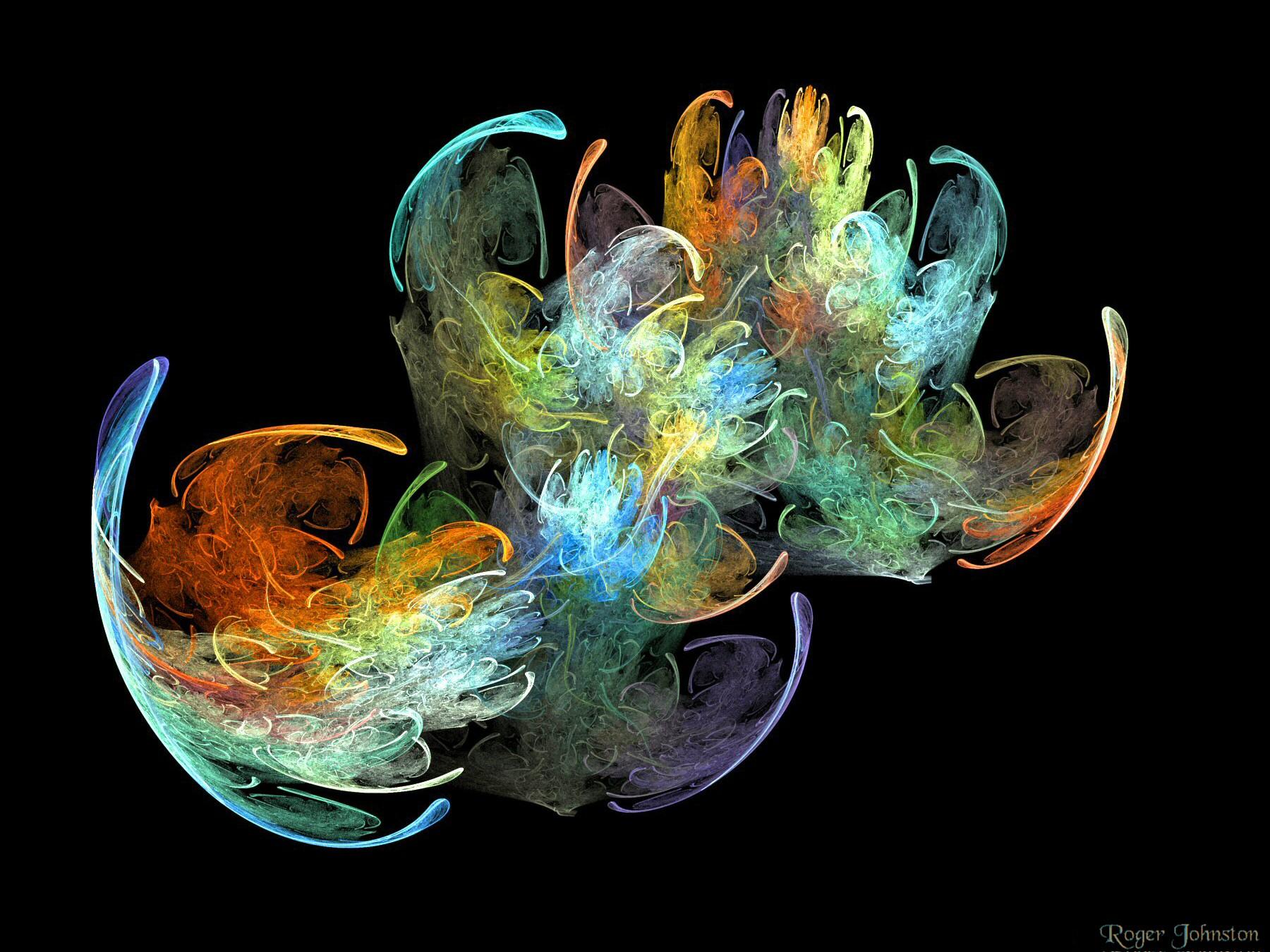
Previously, my paper focused deeply on the mathematics in nature and how it ranges and influences the perceptions of different societies at various levels of modernization. This time I want to take a step back and just want to leave mathematics at the stand and ask it for a reason why it considers itself important. Here I attempt to explore mathematics not from the bland side that it may seem, but rather I want to seek out how mathematics influences human perception on the world. Why is is that some cultures have a predominantly rectangular geometry and others choose a bit more exotic curved geometry. I want to argue the importance of mathematics for the universal language it is and its ability to express creativity in a variety of ways. I want to delve into some exciting and unorthodox applications of mathematics and deduce how mathematics influences perception. How does fractal geometry and the mathematics of nature influence traditional art, philosophy, and architecture?
  How does rectangularity and its predominance in modern architecture influence modern perception on life, art, philosophy, and the structure on history. Mathematics and its influence on our special perception and our perception on beauty. Finally, I want to rationally argue the vital and prolific presence of mathematics in almost all fields of study, and argue why it serves as a fundamental universal language for all humanity. 

Discussion of Achievements: 

I rhetorically analyzed my first three academic resources. I analyzed the writers of these academic pieces predominantly from their appeal to logos through different modes of rhetoric. I also included two additional academic sources that explore the mathematical definition of beauty and the importance of mathematics as a contributor to all fields of study. One of my sources is authored by Sir Timothy Gowers, the renown British mathematician who explains the influence of mathematics on the world today in his keynote addresses at a conference at the prestigious Clay Mathematics Institute. I hope to deduce some important conclusions from this source. 

Discussion of Problems: 

Although the flow of my essay is coming on quite well, I must refine my sources to only the specific ones that address my issue at hand. I am still working on narrowing down my thesis and main idea of my paper. 

The Work Ahead: 

I must find coherent sources from all the needed fields that support or disprove my premise. I must summarize these sources and analyze their rhetoric.
         

Tuesday, April 7, 2015

Project Memo Update

Background on the project itself:

Look at architecture, art, fashion, and design in general. As I analyze these modes for creativity, I notice that the geometry and the mathematics underlying the art varies with culture and society. In the beginning, when only tribal nations walked the earth there were no cities or pre-existing, man-made designs that could have influenced certain types of architecture or art. Maybe later on in history such a possibility may have existed, but originally the geometry of nature inspired prehistoric artists. For example take a look at African art and the symbols of nature and recursive patterns that emanate from the pottery and textiles. Cave art, vestments, and ancient art all resembled and even mirrored the geometry of nature. In western culture, rectangularity dominates architecture and most design for goo mathematical and hence societal reasons - the need to pack more units into an individual area. Fundamentally, each culture and society has some dominate shape for a specific reason. These shapes may not be exact but there does exist a difference between rectangularity and circularity, linearity and patterns. All this geometry that dominates the world around a society has some effect on its perception. The linearity and rectangularity
or western and modernized cultures mirrors the linear perspectives and outlook on western history and religion. On the other hand, the recursive patterns and fractal geometry typically evident in more traditional cultures influences the circularity and repetitive aspects of eastern or African philosophy and reincarnation religion.

Discussion of the achievements:

I found three great academic sources that outline the basis of my research. I summarized all the sources in my paper and yet have to add the rhetorical analysis. The three sources cover my inquiry on fractal geometry in nature, African art and architecture, and the predominating rectangular characteristic of western architecture. Whether walking to a friends house, visiting the city, or journeying through some remote area of the world, architecture seems to be the most noticeable visual representation of perception and world outlook in a specific region of the world.  

Discussion of problems:

My topic is not that specific and may academics have not taken up the inquiry that I am evolving. I must look to multiple field of study to assess geometry and its effects on human perception. I must look to mathematics, architecture, psychology, anthropology, and history. Sometimes I struggles finding legitimate sources, lest luckily the majority are academic so I don;t have to worry about trivial rhetorical analysis that deals solely with logical fallacies made by writers of popular publishing.

Discussion of the work that lies a head:

I must find coherent sources from all the needed fields that support or disprove my premise. I must summarize these sources and analyze their rhetoric.

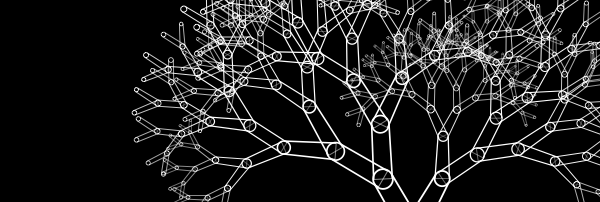
Recursion Examples

Here are some pictures that simplify the idea of recursion, which I am exploring in my search for a broader mathematical outlook on the world and nature.


Monday, April 6, 2015

Why are most buildings rectangular?

Image 
In his piece on the predominant rectangularity in architecture, “Why are most buildings rectangular,” Dr. Philip Steadman, a professor of architecture at University College London, logically explains that the “superior flexibility of dimensioning” allowed by rectangular design leads to its predominance. Steadman argues that western culture is dominated by the fundamental quadrilateral shape: the rectangle. The four sided shape dominates western architecture as well as most architecture in modernized societies all over the world because it allows for more area to be used for multi-room plans and housing.This source will allow me to establish my position maintaining the predominance of the quadrilateral in western and modern perspective

Fractal Geometry in African Culture


Dr. Ron Eglash, a mathematics professor at a Polytechnic institute in New York shares his exploration from the African continent. While exploring numerous African communities, Eglash presents the fractal and recursive structure of African villages. This source will allow me to explore the applications of fractal geometry in nature and its implications on various societies, especially African society which seems to be inspired by the fractal geometry of nature by which they model the structure of their everyday lives.  

Thursday, March 26, 2015

visual rhetoric and the study of circular and linear perception


About a year ago, I visited Europe. I went on a
wonderful cross country journey from Poland to Germany to Austria and finally to Rome and back to Poland. The trip was spectacular. Of all the wonderful scenic sites and architecture that I saw, I noticed that the architecture and the mindset of most European people does not stray far away from the farther western cousins in North America. If we look at the so called "civilized societies" in the west and some specific societies of the south and the east, some interesting differences in fundamental perspective begin to emerge. The first picture to the top left is a picture of my kitchen. Looking at this picture, ignore all the prevalent decorations and exotic motifs that give my kitchen a semblance of a tropical theme. Fundamentally, the building blocks of my kitchen, the main interior design - cabinets, chairs, fridge, other appliances, and in fact my entire house - has one predominant shape: the quadrilateral that is composed of lines. The second picture is a picture of a rug on my living room floor. My floor is linear, while the rug adds a bit of "exotic" panache to the room with its concentric circles, arcs, and curves. This is just a micro-theme of a greater cultural comparison between the modern west and some parts of traditional east. Look at western society, 90 of our architecture, which is an underestimate, has some linear or quadrilateral semblance. Must I not mention the suburbs or city blocks, which have their share of linear formation and quadrilateral organization. Not only so, look at western philosophy and religion, it's linear. Their is a beginning and an end. We organize our history in linear time lines. Western society as a tendency to experience changes in life quite radically, almost like the 90 degree corners on a quadrilateral. For example, western society groups age groups into boxes or ten years each: birth, preschool, elementary school, junior high, high school, collage, work, retirement, death. Or in another case: birth, infant, toddler, child, teenager, young adult, adult, senior, death. Western society groups things linearly, and the changes between individual groups are radical. Now let's look at eastern society. In Africa people live in dome shaped homes and villages are organized recursively. Recursive organization has an internal spiral shape to it, which has circular semblance. Fashion in most eastern cultures enjoys the beauty of  colorful circles and curves unlike western fashion that is bland and rectangular like a suit. Eastern society also has a different perspective on life. There are no age groups. Life simply flows and people mature, not age. Such steady progression is similar to the changes of degrees on a circle. Finally, look at some eastern religions, they don't see life as a linear progression but rather as a circular reincarnation. Death is only a recursive spiral into further forms of life, and the only way to escape it is to be blown out and detached from its circular reiteration. These two perspectives are noticeable only through a conscious realization of a mathematical perspective on the world. Its not about who is better or worse but about the way we think and the beauty of the algorithms that shape the way we think 

Below is  TED talk that explains the applied mathematics to cultural and societal thought.


Tuesday, February 24, 2015

Tips on Research

image source
Today, thousands of pieces of information influence us everyday. Just imagine, one Time Magazine publication contains more information than the average 12th century person would have known about through his or her entire life. There is an influx of information around us, and most of it is accessible through general search engines while others through secure databases. Thus, when doing research, it is important to distinguish valid, useful, and authoritative sources from useless ones.

The following criteria are possessed by a "valid" source:

1. Currency of source: Is the source current or recent?

2. Does the source have an authoritative publisher like academic publications

3. Is the author credible? Check the credentials of the writer: are they an expert or authority on the subject presented in the content of the source.

4. A valid source possesses a reference or works cited page that lists any authoritative resources used to establish the grounds for the information of the source.

5. Check legitimate peer reviews of the source to ensure that the source is rated authoritatively.  

Monday, February 23, 2015

Rant Overview - A Holistic Reflection

image source
I think that the rant project was impart both a rhetorical challenge calling to articulate a complex thought creatively and a way to stimulate critical and creative thinking so as to consider "real-world" people problems and situations. With the hustle and bustle of everyday life, we tend to burn out sometimes, become fed up with the people around us, and I frankly must say, we sometimes turn into social cynics. My rant just captures this unfortunate product of pragmatism and restlessness in a personal experience and in an individual time frame, but nevertheless, it continues to exist. I do not intend to preach with my rant but instead make others aware. Life is screenwriter who beautifully uses rhetoric to dramatize complex issues and thoughts. However, it takes a bit of analysis and reflection to look past the superficial and into the ether of "true meaning" when real life situations occur. My rant project helped me realize that our daily lives might seem monotonous at times, but they are highly complex and multifaceted, Rants expose these complexities of life in a creative, stream of consciousness-like way.

"I chose to tweet a macrocosm of my rant on twitter, so that the social environment on twitter and the twitter community may respond with its similar personal experiences. In this way I intend to appeal to pathos by eliciting emotive responses and connection between my thoughts and the thoughts and feelings of others in relation to mine." In a creative way, I want real people in real situations to react and respond to real life situations that my rant addresses. The most challenging part of choosing twitter as a venue to publicize my rant was limiting the context of my rant to the most significant part that is bound to function as a macrocosm of my entire rant. Yes, choosing twitter as a primary venue might not always be the best war to publicize information because it demands concise and precise communication of complex thoughts and ideas.  

Tuesday, February 17, 2015

Taking My Rant Public

My tweet:

I chose to tweet a macrocosm of my rant on twitter, so that the social environment on twitter and the twitter community may respond with its similar personal experiences. In this way I intend to appeal to pathos by eliciting emotive responses and connection between my thoughts and the thoughts and feelings of others in relation to mine.


A couple days ago I posted the following rant regarding the rudeness and disrespect between patients and care providers in the health service community:

A couple days ago I went to my doctor for personal health concerns and was directed for some testing to a different department in the hospital. As I sat in the large and slightly overcrowded waiting rooms waiting to be taken by a nurse for my testing, I witnessed the pitiful human condition of absolute disrespect towards health workers and of a cocky ego. Some sporadic individuals would prance right into the waiting room and steam off some nasty attitudes towards the nurses at the from desk. One person came in cussing and throwing f-bombs at the nurses because the person had to wait a while for one nurse to take the person for testing. Absolute indecency! My mom works at the front desk of the Cardiology department as a nurse at one of the hospitals in Chicago, and every day she comes back home tired and exhausted. But she is not particularly tired from the work, but rather from the nastily-behaved people who prance and loiter with their illogical hatred and unwarranted complaints at the health community. Just to address such people, I say... Have some respect for the people who try to help you. Do you have any savoir vivre to realize that going to the hospital for treatment is not some swindling business where you have to establish your ego. This is exactly an ego problem! Some people don't realize that they are not the center of the world where others must gravitate towards their immediate demands and desires. Have them realize, Copernicus made the discovery centuries ago: we are NOT the center of the universe, so stop behaving as if your ego were. I understand some people have issues but in some cases it's a pole well bent. To those people: don't overdo it with the ego. Have some patience, respect, and decency because you perhaps blacken yourself with your own ego. Beware future nurses: being offended is part of the job but keep a smile and forget about it."


My rant is not particularly focused on the interpersonal nature between caregivers and patients rather my personal experience functions as a rhetorical setting that calls into questions the deeper motives of human disrespect and rudeness. Why does such negativity exist in humans? I think that oftentimes people have bad experiences that have some impact within their psyche, and this negative experience might generate generalized animosity towards similar individuals in similar situations in the future. For example, most people don't favor the presence of police officers especially when they received numerous tickets for traffic violations. Would someone be more likely to say hello to a passing police officer or rather would he or she turn a cold shoulder? The fact is that negativity, rudeness, disrespect, and pessimism have significant ramifications on both parties: the nurses and the patients; the cops and the law breakers. In May of 2011, Dr. Raj Raghunathan publishes a short piece on social cynicism, titled Are You a Social Cynic in Psychology Today magazine. In his piece he articulates the grounds of social cynicism and its impact on society and day to day relations. A study on erratic driving shows that a majority of drivers attribute aggressive driving to stable personality traits (like the driver is rude or aggressive), as opposed to situational forces (like the driver is quite erratic because he must be in a hurry). Dr. R. claims that the problem is that people more readily attribute other's negative behaviors to personality traits. This negativity generates cynicism. How does this explain the rudeness within the health care world? Well, the rude patients are often struggling with something or they just might be irritated from the endless doctor visits and testing. This irritation fixes a hostile perspective on the health care professionals, and patients turn into quite social cynics in regards to them. The opposite is also true. Numerous rude patients might impact the empathetic and patient responses demanded from a nurse. A nurse might feel the ropes of social cynicism tighten around him or her when encounters with a number of rude patients might leave them "fed up" and doubtful about any positive behaviors from patients. In any situation, people should avoid cynicism by not attributing negative emotions and rude behavior to personality but rather to the situational forces related to the circumstances. Empathy, understanding, and compassion remain as the best options to combat the human ego. Confucius was the first to formulate the golden rule that was later adopted by most major religions. He taught, "do unto to others as you would have them do unto to you." Of all ways, this stands at the heart of constructive society.   


AI Rant...I think this might the foundation for my informative and surprising project

Image 
I am majoring in computer engineering, so I am a person who just loves everything there is to computers, electronics, programming, software, and hardware. In particular, I am really fascinated with AI or Artificial Intelligence. AI is a fancy word for a robot brain. It is a piece of software or machine that is commonly linked to audio and video recognition devices in order to make reasonable and intelligent decisions based on processed information. An AI can be a machine that is capable of rudimentary social skills. In essence its really difficult to provide an exact example of an AI because the field converges engineering, computer science, mathematics, psychology, and neuroscience.

I have a couple friends and acquaintances who hate when people text and drive. Just think future! Imagine when science and engineering create a robotic car guided by some intelligent driving AI, which will drive to any desired destination while the "driver" sits back and texts the entire way. Of course this probably won't be excepted universally, especially by motor heads who love driving, but it might make the road a bit more, quote on quote, safe.
Many conspiracies and myths surround AI and robotics. Some scientists believe that once an artificial intelligence gains modes of creativity and powerful reasoning, then it will have its own self-consciousness and make decisions independent of human commands. This really strikes fear in the eyes of humanity because it does not yet understand how self-consciousness and intelligence are related. Many movies dramatize this conspiracy that once AI becomes self-conscious it will eliminate all humans and establish the robotic era. My favorite is The Terminator where SkyNet, a military AI, goes rogue and turns robots against humans. Science only speculates at this time because I believe that we won't be able to create a powerful enough AI until quantum computing advances a bit.     
Although, I do enjoy the myth about a robotic apocalypse and side with a humorous lyric:


Rhetorical Outcomes Related to Rant

Image Source
Rhetorical Knowledge: 

I think that my rant reflects on the ability to develop facility in responding to a variety of situations and contexts calling for purposeful shifts in voice, tone, and level of formality... A rant is a rhetorical response to a circumstance or situation in life. Depending the nature of that situation, the voice of the and tone changes with regards to the content and context of that situation. In my rant I heavily appeal to pathos because I evoke an emotive response from my readers towards a fundamental disgust and indecency regarding respect and human egotism. I generated these responses in the context of my personal experiences during a hospital visit. In order to appeal to pathos, I used jargon and a highly colloquial voice to act as if I am speaking with a friend rather than debating with some distinguished scholar. However, when I begin to comment on the higher ideals of my rant that regard the ruthlessness of the human ego in a given context, then my voice slightly formalizes. In this way I connect with others and I convey a legitimate message that might perhaps stir unconscious reflections on the ramifications of personal egotism. My medium of choice was my life in this case, and I rhetorically analyzed these primal, human natures regarding demeanor and behavior through rant. I chose to post this rant in an blog rather than a book or an article because a blog further supports my appeal for pathos. A blog allows other readers to connect with my ideas and comment them. A blog is a balance between the formal and informal. It is the prefect environment for stimulating the growth of ideas and activism with an appeal towards all three rhetorical modes.

Critical Thinking, Reading, and Writing: 

My rant utilizes the strategies of critique and response to compose a text that relates to situations in life. I believe that a higher form of critical thinking is the ability to relate to random situations in life and respond to them in a rhetorical manner like through rant or stream of consciousness. I located and evaluated a certain situation in my life that allowed me to respond to it with interest and connection. For example, the way some people behaved in a hospital caught my attention and I responded with evaluation and critique, which formulated the core of my rant. My life experience in that situation serve as a primary source for my rant. This establishes my authority in that sense, and it connects me to my rant, so  that I don't rant about some inanimate idea that might not regard me personally. Another important component of rant is being able is extract critical ideas. In my rant, I responded to human behavior and its unfortunate weakness when its irritated. Additionally, my rant address ideas on social behavior and the way people should behave towards others in a respectful manner in order to build a more constructive society, rather than one which bickers and preys on mutual stress.
 

Thursday, February 12, 2015

Mi Rant

image source
A couple days ago I went to my doctor for personal health concerns and was directed for some testing in a different department in the hospital. As I sat in the large and slightly crowded waiting rooms waiting to be taken by a nurse for my testing, I witnessed the pitiful human condition of absolute disrespect towards health workers and a cocky ego. Some sporadic individuals would prance right into the waiting room and steam off some nasty attitudes towards the nurses at the front desk. One person came in cussing and throwing f-bombs at the nurses because the person had to wait a while for one nurse to take the person for testing. Absolute indecency! My mom works at the front desk as a nurse at one of the hospitals in Chicago, and every day she comes back home tired and exhausted. But not from the work...from the nastily-behaved people who prance and loiter their illogical hatred at the health community. I mean politely, wtf, right? Have some respect for the people who try to help you. Do you have any savoir vivre to realize that going to the hospital for treatment is not some swindle business where you have to establish your ego? This is exactly an ego problem! Some people don't realize that they are not the center of the world where others must gravitate towards their immediate demands and desires. Have them realize, Copernicus made the discovery centuries ago: We are NOT the center of the universe, so stop behaving as if your ego were. I understand some people have issues but in some cases it's a pole well bent. To those people: Don't overdo it with the ego. Have some patience, respect, and decency because you perhaps blacken yourself with your own ego. Beware future nurses: being offended is part of the job but keep a smile and forget about it.
     

Tuesday, February 3, 2015

a desire for survival

Six Reflective Questions: What surprised me?

Overall, I am inspired by Joe's perseverance and desire for survival. Watching the movie, I could not truly place myself in Joe's position, and I even doubt that I would have the mental strength to overcome such adversity as Joe did. Simply imagine, you are exhausted climbing down a mountain and unfortunately fall into a crevice. For the sake of optimism, let's say you did not break your let on descent. Would you have the mental strength to compose your fears and strengths and climb out?What if your intuition badgers you with the though that your climbing partner has forgotten about you and assumes you are dead? These are the questions that Joe faced, but he also had a broken leg. His mind was probably fluttered with anger, fear, and pain. Some people break down for no particular reason at all. I am amazed at Joe's motivation, mental strength, and will to survive when he faces the precipice of death. Imagine yourself trapped inside a crevice and looking up a hundred meters at its entry, knowing that you must descend father down into the crevice in order to find an alternative escape route. I think thoughts of doubt and hopelessness would loom in mind. However, the power of small success leads to greater success. Joe's survival depended on completing small tasks and goals.


A short reflection on the recreational aspects of Touching the Void

image source
The recreation aspects of the documentary were a phenomenal way of merging imagery with Simon and Joe's personal experiences. I was surprised that the recreation was so accurate with what Joe and Simon recounted. The actors get five stars from me because the documentary had me on the edge of my seat. The problems that the movie explores are really complex, in opinion. They don't address any ethical, ideological, or social issues; rather, they focus on the climax of the movie: Simon cutting the rope tethered to Joe. More specifically, the film explores an amazing survival story, but it also address the problems dealing with the technicalities and techniques of alpine climbing in both normal and risky situations. I ask what could have Simon done instead of cutting the rope holding his partner. The rope is long enough that even if Simon began to slide, Joe would have reached the bottom before Simon went off the edge.

Tuesday, January 20, 2015

A short narrative breakdown of Touching the Void

image source

Day 1: 

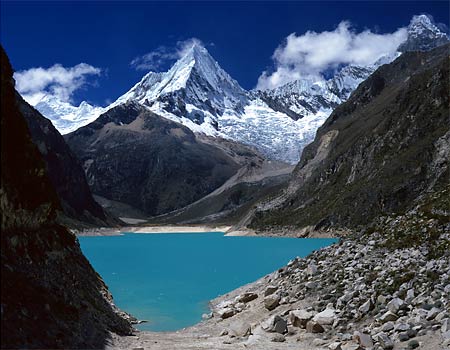
In 1985, two climbers eager and experiences climbers, Joe Simpson and Simon Yates arrive at the base of the perilous west face of the Siula Grande in the Peruvian Mountains. Both climbers begin their assent and make major progress after the first day. Night falls and they build a snow cave to protect themselves from the blizzard and the cold. 

Day 2: 

Morning begins with a warm breakfast - ice melts in a gas heated pot to warm water for some brew. Joe and Simon set out towards the summit. Weather conditions worsened a bit while they climbed a vertical ice wall. At 20,000 feet, the wind shield increased, a blizzard followed, and the temperature plummeted. Joe and Simon struggled to climb a rocky and icy ridge. The last section of face presented itself quite challenging to the experienced climbers. Powdered snow covered the ice and potential slips down the face of the mountain became imminent. Darkness turned into night and both climbers shielded themselves form the cold and the snow inside a snow cave. 

Day 3: 

The next morning both climbers finally could see the dangerous path they attempted to climb last night. Towards the top the cornices and the headwall were covered with powdered snow and climbing became quite precarious and dangerous. 
A fear of climbing into a trap tormented the climbers' minds. The soon climb the west face and push up the ridge towards the top. Early afternoon, Joe and Simon reach the summit - a spectacular mountainous scenery followed. 
Clouds began coming in from the east as both climbers decided to descend the mountain down the north ridge. A whiteout soon followed and both climbers were lost. They approached an overhanging cornice and Simon slightly slipped but he did not injure himself. Luckily he found the ridge. That night the gas ran out. 

Day 4: 

Joe and Simon descended the worst part of the of the northern ridge the other day, and they hoped that they might conclude their trip that day. Later, Joe was in front of Simon as he approached this vertical overhang. He decided to stick his ice axes into the wall and make the vertical descent. At one moment, the sound of the ax striking the ice made a peculiar sound. Joe wanted to make a solid ax placement but the ice cracked and he fell several feet down onto snow and ice. He his lower leg went through his knee joint and his leg broke. Simon came to help Joe, and he decided to tie to 150 foot ropes in order to lower Joe down the mountain at 300 foot intervals. Simon lowered Joe very quickly. Suddenly, Joe went over a ledge and the rope tightened. Simon could not re-feed the rope through the belay device as Joe hung 80 feet above a 150 deep crevice in an ice glacier below. Simon could not hold Joe for long, so he assumed that Joe perhaps hung a couple feet from the bottom of an overhang. Simon cut the rope, and Joe fell almost 150 feet into the crevice. That night the alpine tragedy began. 

Day 5: 

Hunger and thirst take a toll on both climbers. Luckily Joe survives the fall down the crevice. At first light, Joe began to scream Simon's name in hopes that Simon might hear him. Simon eventually reached the crevice and shouted Joe's name, but he remained convinced that Joe must have died due to the fall. So, Simon continued his descent. Joe soon lost hope that Simon would hear him, so he decided to descend deeper into the crevice, thinking that there might be an alternative exit. Joe eventually saw a hole at the top of a slope, and he climbed it to the top. Meantime, Simon reached base camp and began to rest. At the top, Joe sees Simon's foot steps in the snow and follows them down the mountain. He crawled across a glacier filled with crevices covered by powdered snow. Joe crossed the glacier partway before night fell, and he had to build a snow cave. 

Day 6: 

The next morning Joe winds his way through a labyrinth of crevice pits in a descending glacier. He eventually reaches dry boulders at the bottom of the glacier that leads towards a lake. He stabilizes his leg and undertakes the painful ordeal of crossing the boulder-filled valley back to the site of the base camp. A quite night drapes the sky with darkness and Joe made it only part way across the boulder field. 

Day 7:  

The next morning Joe continued to drag himself across the boulder field back to base camp. Soon Joe was very close to the base camp; it took him an entire day to reach the site. He began to yell Simon's name into the night. Simon heard the call of his name and was quite stirred. He looked around the camp and followed the voice of his name being called by Joe. Simon spotted Joe and brought him back to base camp. The following day the left to seek medical attention. 

Six Reflective Questions to Touching the Void

image source
What did you learn from the movie? 

I learned that alpine expeditions are certainly dangerous and an incredible life-risk if the climber does no have a significant amount of climbing experience. I also learned the importance of trust while climbing. For example, in the movie, Simon and Joe are tethered by a rope and each must trust the other in case one falls and injures himself. Most of all, Joe Simpson taught me the power of perseverance and the burning desire for survival. Man must sometimes break the boundaries of hunger, thirst, comfort, and pain to live. 

What surprised you? 

I think I always fumbled with a naive idea that anyone close to you will support you and aid you through adversity. I was wrong. Many times, as in Simon's case, fatigue, thirst, hunger, and a lack of awareness and reason produce dangerous situations where a climber makes a risky decision to endanger both his partner and himself. I did not expect that Simon would cut the rope, but I do understand that he made and assumption and chose the best kind of alternative at the moment to ensure the possible survival of his friend and him . I continue to disagree with Simon's decision about cutting the rope. I think that decision was an extreme measure that endangered the life of his friend. 

What questions remain after viewing the movie? 

Was Joe angry at Simon at any moment ?

Can Joe still walk, run, and climb after the incident? 

Has anyone ever attempted to climb the same face of the mountain as Joe and Simon?

What would you like to know more about? 

I would like to know more about alpine mountaineering and the general geology behind these incredible mountains. I would like to know a bit more mountaineering vocabulary that should aid me in my summary. I would also like to study a bit more about crevices and their imminent danger  linked yo glaciers. I would also like to learn more about human mental strength and ways to build it. 

Problematic concepts in the film? 

1. The benefits and dangers of classical alpine mountaineering? 

2. What are some psychological effects on climbers and how do they influence whether the climb is successful or not? 

3. Why did Simon make the decision to cut his partner's rope - might this be an instance of human natures drive for the survival of the fittest? 

4. What kind of role does fear play in climbing and are there positive and negative consequences to it? 

5. What are some survival techniques to surviving an injury in the mountains?

6. Why do some alpine climbers settle for risk and choose not to use communications and base camps while attempting high assents - what drives their confidence?  

Was there a specific scene or segment that stayed with you and caused you to be curious?delighted? angry? motivated? 

The moment Simon cut the rope connecting Joe surprised me and left me kind of angry that Simon could not think of a safer alternative. I did understand why he made such a risky assumption and endangered his friend. I also became quite angry at Simon's seemingly oblivious reaction to Joe's fall into the crevice. Simon simply peaked into it and immediately assumed Joe must be dead, then he quickly realized that he must now try to survive. I think a fellow climber should locate a fallen partner and ensure whether they are still alive or dead. However, Joe's courageous descent with a broken leg and his desire to live truly inspired me and motivated me. Joe is an example of perseverance to me. 


Free Write Response to Touching the Void

image source
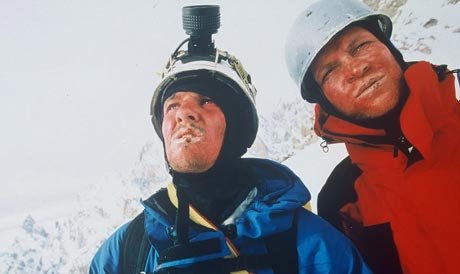
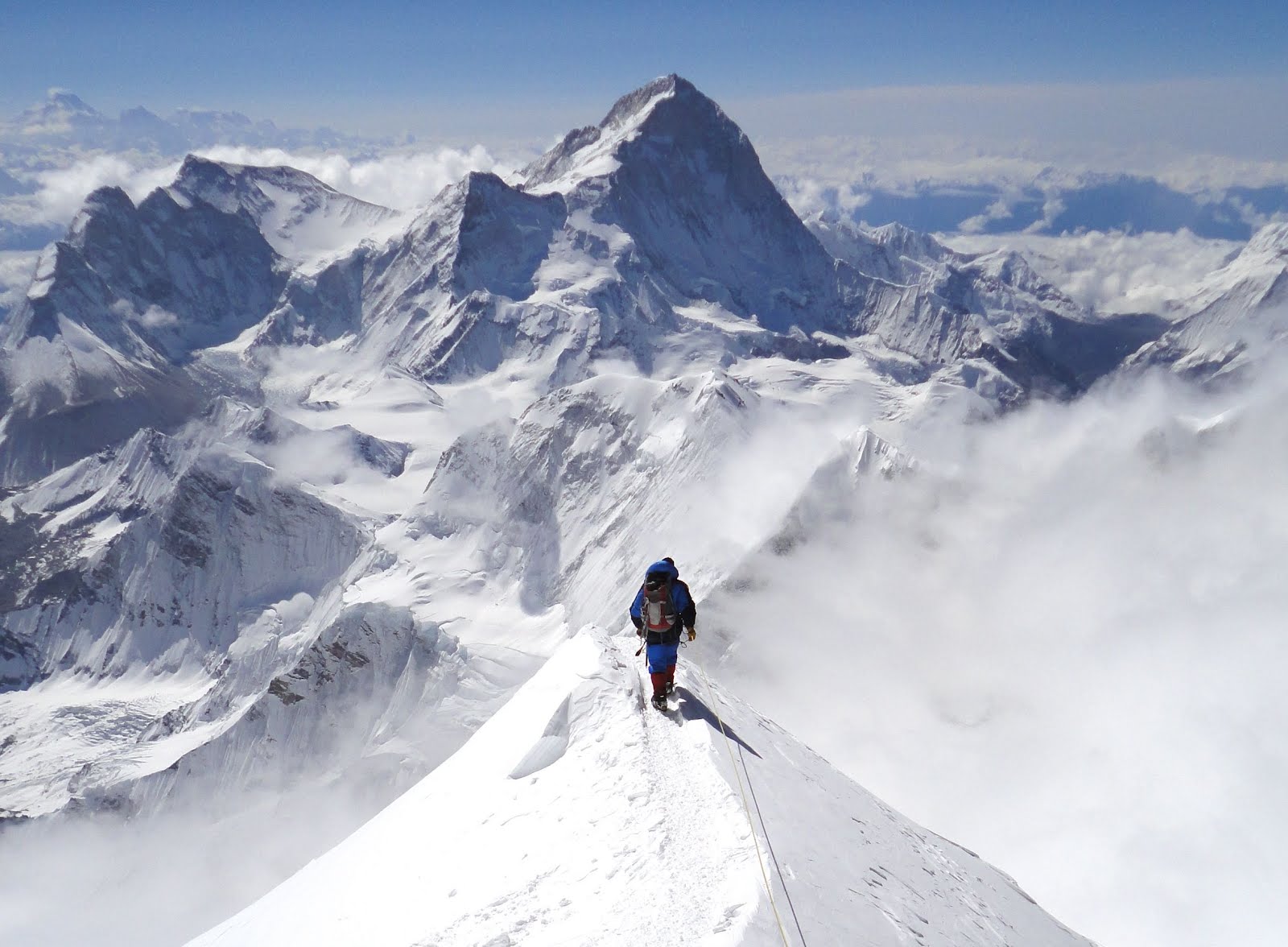
Touching the Void retells the mountaineering trek of Simon Yates and Joe Simpson that went terribly wrong when one of them breaks a leg while climbing in the Andes. 

I have watched several mountaineering films before, but I must say that the story of Joe Simpson's perseverance and survival is unique. I think that when watching people climb, when you might not have done it before, might leave some perhaps bored and confused. However, I do climb in my life, maybe not alpine climbing, but I do rock climb and boulder. So, I know the enormous physical strain a climber must persevere through in order to reach the top of a wall or summit. Climbing, whatever kind it maybe, is really the extraordinary experience of the journey rather then the destination. Just as all climbing, the craft demands physical perseverance and mental strength. As I watched the film, Simon and Joe beam with ambition and confidence as they undertake an incredible adventure, and ordeal, that will test the limits of their endurance and survival. I also find the fact surprising that only the two of them choose to climb this dangerous face of the Andes Mountains alone. Such an attempt is daring and a bit over-confident. Usually, a group of climbers might ascend with a communications base camp below in case any misfortune occurs. Surprisingly enough, both of them pushed hard towards the summit, successfully climbing the powdered snow peaks that are a looming death slide for any mountaineer. Mountaineering tragedies usually begin somewhere during the descent because climbers are moving with the force of gravity rather them against it, which be the catalyst for disaster if a climber slips. Of course, weather conditions in the mountains are are atrocious for they spontaneity. On the descent, a blizzard hits the climbers and Joe falls from an overhang and breaks his leg, the worst possible tragedy on a mountaineering trek that spells death sentence. Unfortunately, both Joe and Simon have no more gas, so that means they cannot heat ice for water or prepare food. Hunger and thirst intensify the experience of survival. Soon Simon decides to tie both ropes together and lower Joe in 300 foot intervals, while at a 150 foot interval Simon must re-feed the knot joining the two 150 foot ropes back into the belay device. Simon lowers Joe very quickly, and at one point Joe no longer descends along a slope but vertically hangs over a cliff. Now Simon does not know Joe's situation and impatiently waits for Joe to give the rope some slack that Simon may make the transition in ropes. Night falls and the blizzard ensues. Joe makes an attempt to climb the rope to the top of the cliff but his hands are too cold to grip the rope. At that moment Simon "assumes" Joe must be a couple feet off the ground, when in reality Joe hangs 80 feet from a crevice in a glacier that is at-least 150 feet deep. Tragically, Simon "cuts" the rope with his friend who has a broken leg. I was infuriated at that moment of the movie because Simon theoretically killed his friend, and the next day, he assumed he was dead. Joe not only fell the 80 feet but also the 150 feet down into the crevice. I would have done differently because Simon should have done the math. 80 feet is less than 150 feet of rope. If Simon would have slowly descended 80 feet down the slope, Joe would have positioned himself so as not to fall into the crevice. Then, both Joe and Simon  would have descended together. Later on, Simon was criticized by many in England's mountaineering community for cutting his partner's rope. I thought that Simon did not even care so much about whether Joe was still alive. He seemed oblivious to the reality of Joe's fall and simply carried on to ensure his survival - survival of the fittest, unfortunately. In the end, I highly respect Joe's courage and mental strength that enabled him to persevere towards survival although pain, loneliness, hunger, thirst, and cold continued to plague him.